
How Smart Home Sellers Win in Today's Market
Prepare, Price, and Promote: A Smarter Strategy for Selling Your Home

I once had a seller call me the morning after her listing went live, upset that it had only had six online views overnight. She wanted to drop the price immediately. I asked her to give it a week. By day four, the photos had been reshot with better light, we'd fixed the one thing every early viewer mentioned in feedback — a cluttered kitchen counter that made the room look smaller than it was — and the showings started rolling in. She had three offers within twelve days, at full price.
Nothing about her house changed in that week. What changed was how it was presented, priced, and put in front of the right buyers. That's really the whole story of this article.
The best sellers I work with don't just list their homes. They position them to win.
There was a time when selling felt almost effortless — sign in the yard, a few photos, and the phone would ring. In the most competitive stretches, homes sometimes got multiple offers within hours, and buyers barely had time to think before someone else beat them to it.
That's not the market I'm working in with most of my clients right now.
Today's buyers are more selective, more informed, and laser-focused on affordability. Before they ever request a showing, they're comparing dozens of listings, running payment calculators, checking property taxes, pricing out insurance, researching the neighborhood, and quietly deciding whether a home even looks worth the drive.
Nationally, June 2026 closed out with roughly 4.6 months of existing-home inventory, and the median existing-home price sat at $440,600, with elevated prices and borrowing costs still weighing on what buyers can comfortably afford. That doesn't mean every market is sluggish — a well-priced home in the right neighborhood can still move fast. But it does mean buyers generally have more information, and in a lot of areas and price points, more options than they had a few years ago.
Real estate is always local, and I see this play out block by block. A well-priced home in a desirable neighborhood can get snapped up in days, while an overpriced or poorly presented one two streets over sits and sits.
That's exactly why I tell every seller I work with: you can't just rely on the market to do the work for you anymore.
I build every listing strategy around three things: Prepare. Price. Promote.
Together, these create the interest, confidence, urgency, and negotiating leverage that get a home sold — for the right number, on the right terms.
A gorgeous home can still struggle if it's priced wrong. A perfectly priced home can get skipped over if the photos are flat. Great marketing can get clicks, but it can't save a showing if the house disappoints buyers in person. It's only when all three come together that a home is truly positioned to compete.
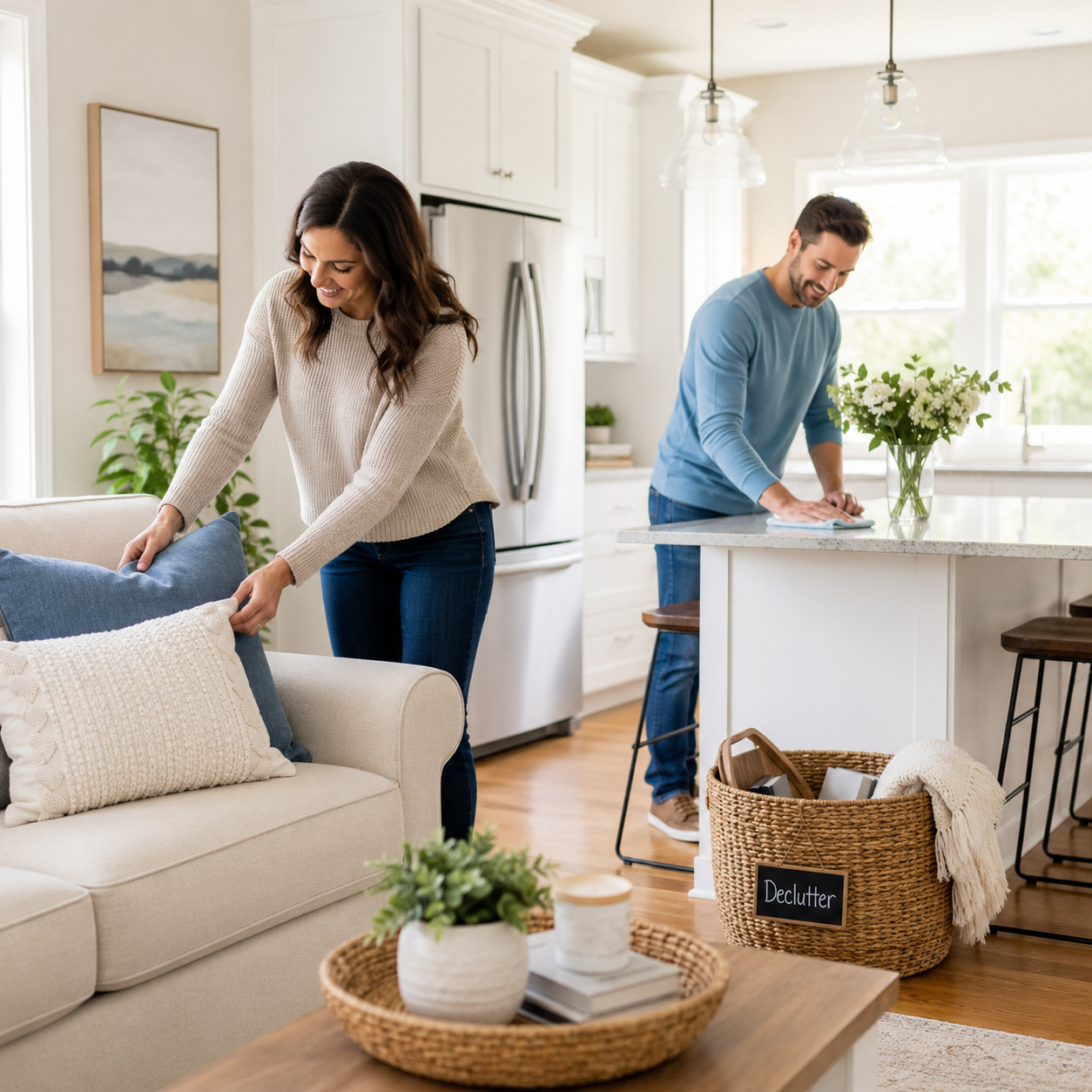
Part One: Prepare the Home Before the Buyers Show Up
One of the mistakes I see most often is a seller rushing onto the market before the house is actually ready.
I hear versions of this all the time:
"We'll finish the repairs later." "We can always redo the photos if buyers don't respond." "We'll declutter after the first few showings." "Let's just list now and see what happens."
Here's the problem: a listing gets its biggest surge of attention the moment it goes live. Buyers with saved searches get instant alerts. Agents in the area take notice. Serious buyers who've already toured a dozen homes compare yours against everything they've already seen — right then, not two weeks later.
You want the house looking its absolute best during that window, not after it's already passed you by.
You Don't Always Get a Second First Impression
Picture a buyer scrolling and landing on your new listing. They see dark, poorly lit photos. Cluttered rooms. Peeling paint. Overgrown landscaping. Countertops buried under personal items. Obvious maintenance issues. Missing details in the description.
They might just keep scrolling. And they might never come back — even after you fix everything. By the time you've made those changes, they've already formed an opinion, or found another home, or simply moved on.
The market doesn't always hand you a clean second chance. That's why I push preparation before a listing ever goes active, not after.
Preparation Isn't Always a Renovation
I want to be clear — getting a home ready doesn't mean tearing out the kitchen or spending $40,000 you don't need to spend.
What actually makes sense depends on the home's current condition, your target price, who's likely to buy it, what you're competing against, local conditions, the home's age, the return you can expect, how fast you need to move, and whether you've got the time and budget to do the work.
Some homes genuinely need real repairs before hitting the market. Others just need a good, honest cleaning and some thoughtful editing.
The goal was never to make the home perfect. It's to remove the objections buyers would otherwise use to talk themselves out of it, and let them actually see what the home is worth.
Fix What Buyers Will Actually Notice

Sellers often obsess over big-ticket upgrades while overlooking the small stuff that jumps out immediately. Nobody notices that you remodeled the bathroom five years ago. Everyone notices:
A leaking faucet
A loose doorknob
A cracked light switch
A water-stained ceiling
A cracked window
A closet door that won't shut
Missing trim
Burned-out bulbs
Peeling exterior paint
A wobbly handrail
Dampness in the basement
An odd smell
Small stuff like this adds up to a bigger worry in a buyer's mind: if they didn't fix this, what else did they skip? A string of tiny maintenance issues can make a genuinely solid house feel neglected.
I like to walk a home with my sellers before listing and sort everything into three buckets:
Bucket one — fix before listing. Visible defects, safety issues, active leaks, damaged surfaces, poor lighting, strong odors, half-finished projects.
Bucket two — worth considering. Improvements that could strengthen the presentation but should be weighed against cost and likely payoff.
Bucket three — disclose and price for it. Some things are too costly or time-consuming to fix before selling. In those cases, we disclose honestly and build it into the pricing and negotiation strategy instead.
Decluttering Is About Space, Not Judgment
Decluttering is one of the cheapest, highest-impact things a seller can do — and I promise, it's not a judgment on your stuff. It's about helping the home look bigger, brighter, more organized, easier to maintain, and genuinely move-in ready.
Buyers need to be able to read the size and purpose of every room at a glance. Too much furniture makes rooms look smaller than they are. Crowded counters, shelves, and closets make buyers assume there isn't enough storage — even when there is.
I usually suggest removing excess furniture, collections, seasonal decorations, appliances you don't use daily, extra clothing, boxes, oversized toys, personal paperwork, anything piled in hallways, and décor you can live without for a few months.
You don't need to empty the house. You just need to give it room to breathe.
Don't Skip the Closets
Buyers open closets. They open cabinets. They peek in garages, basements, and utility rooms. An overstuffed closet quietly tells them the home doesn't have enough storage, whether that's true or not.
A good trick: pull out anything you won't need before the move and get it into storage, donate it, sell it, or start packing it early. Preparing your home for sale can double as the first stage of your actual move.
Deep Clean — It's Expected, Not Optional
There's a real difference between "generally tidy" and professionally clean, and buyers can tell. They notice dust on ceiling fans, grimy air-return vents, dirty baseboards, soap scum in the shower, grease on cabinets, cloudy windows, pet hair, stained carpet, dirty appliances, cobwebs, odors, and whatever's hiding under the sinks.
Cleanliness does more than just look nice — it shapes how buyers judge the home's maintenance overall. A spotless home says, this place has been cared for. A dirty one makes buyers assume there's more wrong than there actually is.
Odors Can End a Showing in Under a Minute
You've probably stopped noticing the smells in your own home — that's just how it works. Common culprits: pets, smoking, cooking, a damp basement, mildew, trash, carpet, upholstery, or even an air freshener trying too hard.
Heavy fragrance isn't the fix, either — it just makes buyers wonder what you're masking. The better move is finding and fixing the actual source whenever you can.
Use Paint Where It Counts
Fresh paint is one of the best-value improvements out there when it's actually needed. It brightens dark rooms, hides scuffs, evens things out, and makes a home feel cleaner overall.
That doesn't mean everything has to go beige. But a bold, personal color choice can make it genuinely harder for buyers to picture their own furniture in the room. I usually focus paint dollars on damaged walls, stains, heavy wear, half-finished touch-ups, mismatched colors, dated wallpaper, and dark rooms that read as smaller than they are.
The point isn't to erase every trace of personality — it's to make the home appeal to as many buyers as reasonably possible.
Let There Be Light
Bright homes photograph better and just feel more welcoming the second you walk in. Before listing, I have sellers replace burned-out bulbs, keep bulb temperatures consistent, clean fixtures, open the blinds and curtains, trim back landscaping blocking windows, swap out dated fixtures where it makes sense, add lamps to dark corners, wash the windows, and make sure every exterior light actually works.
Lighting quietly shapes how buyers judge room size, cleanliness, and overall condition — more than most people realize.
Don't Forget the Outside
The exterior is your first impression twice — online, and again in person. Before a buyer even steps inside, they're already judging the lawn, landscaping, driveway, walkways, front door, porch, exterior paint, roof, gutters, windows, mailbox, house numbers, and outdoor lighting.
Simple stuff goes a long way: mow and edge the lawn, pull the weeds, trim the shrubs, freshen the mulch, power wash where it makes sense, clean the front door, clear away unused outdoor items, fix torn screens, clean the gutters, upgrade the entry lighting, and add a simple welcome mat. The goal is for the entrance to say "well cared for" before a single word is spoken.
Should You Get a Pre-Listing Inspection?
Some of my sellers choose to have the home inspected before it ever hits the market — checking the roof, plumbing, electrical, HVAC, foundation, moisture, safety, and structural condition ahead of time.
The upside can be real: catching problems early, having time to get real estimates, choosing your own contractors without the pressure of a closing deadline, avoiding last-minute surprises, sharpening your disclosures, and pricing the home more confidently.
It's not the right move for every seller, though — worth a real conversation with your agent and, where appropriate, an attorney about the costs, disclosure implications, and whether it fits your situation. And keep in mind, the buyer will likely still order their own inspection regardless.
Skip Improvements That Won't Pay You Back
Not every dollar you spend comes back to you at closing. I've seen sellers put $40,000 into a highly personalized renovation and not see anywhere close to that reflected in their sale price.
Before any major project, I ask my sellers to think through: is this actually necessary to make the home marketable? Is it something buyers, inspectors, appraisers, or lenders are likely to flag? Are the homes you're competing against already offering it? Would it genuinely widen your buyer pool? Is there a cheaper way to solve the same problem? How long will it take? What's the real expected return? Would you honestly be better off pricing for the current condition instead?
The best pre-sale improvement isn't the flashiest one. It's the one that quietly removes an objection or sharpens the presentation without burning money you don't need to spend.
The First Showing Happens Online
Most sellers picture the "first showing" as the moment a buyer walks through the front door. In reality, it happens on a phone screen, probably in under ten seconds, long before that.
Buyers decide almost instantly whether to open the listing, look at the photos, watch the video, read the description, save it, share it, book a showing — or just keep scrolling.
According to the National Association of REALTORS®, <cite index="3-19">81% of buyers rated listing photographs as the most useful feature during their online home search.</cite> That makes your main listing photo the new front door of your house.
Professional Photography Isn't a Nice-to-Have

Photography shapes what buyers notice and how well they understand the layout before they ever visit. It should present rooms accurately, use good lighting, showcase the home's real strengths, help buyers make sense of how spaces connect, avoid distorted or misleading angles, and stand out against everything else they're scrolling past.
The goal isn't to make the home look like something it isn't — it's to present it accurately, and attractively. Overedited or misleading photos might get more clicks, but they cost you trust the moment a buyer walks in and the house looks nothing like the pictures.
Staging Helps Buyers See Themselves There
Staging can mean rearranging what you already have, removing pieces, bringing in select furnishings, or fully staging a vacant home.
NAR's 2025 Profile of Home Staging found that <cite index="3-20">83% of buyers' agents said staging made it easier for buyers to visualize a property as their future home, and 60% said staging influenced at least some buyers' opinions of a home.</cite>
Staging isn't about turning your home into a showroom. It's about clarifying what each room is for, improving flow, highlighting the home's best architectural features, cutting distractions, and helping buyers emotionally picture their own life happening there.
Part Two: Price the Home for Today's Market
Pricing was never about picking the highest number you're hoping someone will pay. It's about landing on the number that gets the strongest response from the buyers actually out there right now.
The market doesn't care what you originally paid, what you need to buy your next home, how much you've spent on upgrades, what an automated online estimate says, what a neighbor thinks, what a house sold for a few years back, your emotional attachment to the place, or the highest number ever hit in your neighborhood.
Those things matter to you. They mean nothing to a buyer comparing your house against the alternatives sitting in front of them right now.
Value Is Set by Competition
A real pricing analysis should look at recent comparable sales, current active competition, homes under contract, expired and withdrawn listings, homes that needed price cuts, days on market, condition, location, lot characteristics, updates, functional differences, financing conditions, and current buyer demand.
Closed sales show you what buyers were actually willing and able to pay. Active listings show what buyers can pick from today. Pending sales hint at current demand, even before the final terms go public. Expired and withdrawn listings tell you what the market flatly rejected.
Each piece adds part of the picture. None of them alone tells the whole story.
A Sale From Two Years Ago Doesn't Set Today's Price
A nearby sale from a couple of years back can be useful background — but a lot can shift the market since then: mortgage rates, inventory, buyer income, insurance costs, property taxes, economic confidence, employment, seasonality, new construction, neighborhood changes, or new competing listings.
Even then, that sale still needs adjustments for real differences in size, condition, lot, bedroom and bathroom count, garage space, finished square footage, renovations, location, style, age, and amenities.
Good pricing comes from a current market analysis — not a single sale pulled from memory.
Why Overpricing Backfires
I hear the logic all the time: start high, I can always come down later. Buyers will make an offer anyway. I need room to negotiate. Someone might pay more. I don't want to leave money on the table.
The trouble is, buyers don't usually respond to an overpriced home by countering low. They just go buy something else.
Overpricing sets your home up against the wrong competition — bigger, newer, more updated homes on better lots with more amenities. You might think you're competing with similar houses down the street, but a buyer's search filters can quietly slot you into a completely different, tougher category.
It can also make you invisible to the exact buyers who'd love your home. If your ideal buyer is searching up to $600,000 and you're listed at $625,000, they never even see it — while the buyers searching $625,000 to $650,000 expect a level of size or updating your home doesn't offer.
Days on Market Change How Buyers Think
The longer a home sits, the more buyers start wondering: why hasn't anyone bought this? Is something wrong? Did an inspection turn something up? Is the seller impossible to deal with? Would they take a lowball?
More time on market doesn't always mean something's actually wrong with the house. But buyer perception doesn't care about the truth — it cares about the story it's telling itself. A listing that felt fresh and exciting on day one can start to feel passed-over by week six.
A Price Cut Doesn't Reset the Clock
Eventually, a seller drops to the right price. But by then, the listing isn't new anymore. Some buyers already dismissed it. Serious buyers may have bought somewhere else. The market may quietly assume you're getting desperate. New competition may have entered. And you've likely absorbed carrying costs you didn't need to.
A price cut can bring renewed interest, sure — but it rarely recreates the excitement of that first-week launch.
Strategic Pricing Isn't the Same as Underpricing
Pricing strategically doesn't mean giving your home away. It means building the right relationship between price and perceived value.
When buyers feel like they're looking at real value, they click the listing, book the showing, compare it favorably, come back for round two, make an offer, compete for it, accept reasonable terms, and stay emotionally invested through the whole process.
The strongest pricing strategy is often the one that attracts more than one interested buyer — because real competition, not wishful thinking, is what actually creates your leverage.
Price Is Marketing, Too
Price decides who finds your home, what it competes against, how buyers judge its condition before they even walk in, whether agents recommend it, whether buyers think it's worth the drive, and how much urgency the listing creates.
Price should never be chosen in a vacuum, separate from how the home is prepared and promoted. It has to match what buyers actually see, both online and in person.
Keep Watching the Market After You Launch
Pricing isn't a one-time decision — the market starts talking back the moment your home goes live. I watch online views, saves and shares, showing requests, feedback after each showing, repeat visits, agent questions, offer activity, new competing listings, competitor price cuts, and comparable homes going under contract.
Lots of online views, few showings usually points to price, weak photos, unappealing presentation, location concerns, missing information, or a feature buyers can't make sense of.
Plenty of showings, no offers often comes down to price relative to condition, needed repairs, odors, layout, location, or a stronger competing home.
Few views and few showings may mean the home falls outside common search ranges, the listing presentation is weak, the marketing isn't reaching the right people, the price is too high, or demand is simply thin in that category.
I treat feedback objectively — one comment usually doesn't call for action, but a pattern absolutely does.
Part Three: Promote the Home Like a Professional
Getting your home into the MLS matters — it's how the listing reaches agents and most consumer sites — but it's only the starting line, not the strategy.
Real promotion can include professional photography, video walkthroughs, short social videos, drone shots where appropriate, floor plans, 3D tours, a dedicated property website, social media, targeted digital ads, email marketing, direct agent outreach, open houses, buyer database marketing, neighborhood promotion, print materials, relocation exposure, and genuine follow-up with interested buyers.
Not every home needs every tool. The right mix depends on the home, the likely buyer, the price point, the location, and the selling strategy we're running.
Marketing Has to Do More Than Announce the Listing
Saying "this home is for sale" isn't marketing — it's just a fact. Real marketing should make the right buyer stop scrolling, pay attention, understand the value, picture themselves living there, book a showing, and ultimately make a serious offer.
Exposure by itself isn't enough. A listing can rack up thousands of views and still never produce a real buyer if the message, presentation, or price is off.
Sell the Benefits, Not Just the Features
A basic listing says: four bedrooms, finished basement, large deck, updated kitchen, two-car garage. Those facts matter — but buyers also need to see how those features could actually change their life.
That fourth bedroom could become a home office, a guest room, a nursery, a home gym, a hobby space, or a bedroom for aging parents. That finished basement could be a rec room, a media room, a playroom, a workout space, guest quarters, or a home office. That deck could be where mornings start with coffee, summer dinners happen, and holidays get celebrated.
Features describe the house. Benefits are what actually help a buyer imagine their life in it.
Buyers Decide With Both Head and Heart
Buyers weigh facts, but they're also chasing a feeling — they want to feel confident, comfortable, safe, excited, financially responsible, and proud of their decision.
A strong listing quietly answers a buyer's real questions: Does this meet my needs? Can I afford it? Is it worth the price? Has it been taken care of? Can I see myself here? Would I regret losing this one? Does this feel like a smart move?
Preparation reduces doubt. Strategic pricing supports value. Professional promotion creates interest and emotional pull. Put them together, and you're building real buyer confidence — not just traffic.
Accuracy Is What Keeps That Trust Intact
Marketing should be persuasive — it should never be misleading. That means no fudged room descriptions, no inflated square footage, no excessive photo editing, no hiding material defects, no unsupported claims, no misrepresenting permitted uses, no advertising features that don't actually convey, and no leaving out required disclosures.
When a buyer realizes the marketing didn't match reality, excitement flips to suspicion fast — and that suspicion tends to follow the deal all the way through inspections, repair talks, appraisal, financing, title, insurance, the final walkthrough, and settlement. A buyer who trusts you and your listing from the start is a buyer far more likely to stick with the deal when the normal bumps show up.
Video Helps Buyers Feel the Home
Photos are essential, but video adds something they can't — movement, flow, how rooms actually connect, lifestyle context, the exterior setting, even a sense of the neighborhood. A good video isn't just the photos in motion; it helps buyers understand how the home actually feels to walk through. Short clips grab attention on social media; longer walkthroughs help serious buyers decide whether the home earns an in-person visit.
Floor Plans Take the Guesswork Out
Photos show you a room. Floor plans show you how the rooms fit together — whether the primary bedroom is on the right level, whether the bedrooms are close enough together, whether the office is far enough from the living room, how the kitchen flows into the family room, whether there's room for a parent or in-law, where the laundry actually is, and whether your furniture would even work in the space.
The easier a home is to understand, the easier it is for a buyer to take the next step.
Open Houses Are a Tool, Not the Whole Plan
Open houses build awareness, make a home easy to visit, attract unrepresented buyers, and give us useful feedback — but they only work as part of something bigger. Their success depends on local buyer habits, price point, property type, location, promotion, timing, weather, security, and how well we follow up afterward.
A packed open house doesn't guarantee a sale. Traffic isn't the goal. Qualified interest is.
Speak to the Right Buyer
Different homes speak to different people. A first-floor bedroom might matter most to a multigenerational family or someone needing a private office. A large detached garage could catch the eye of a contractor, collector, or hobbyist. A fenced yard matters to pet owners. A cul-de-sac appeals to someone tired of traffic. A finished basement draws buyers who want flexible space. Proximity to commuter routes matters to people juggling multiple job sites. A low-maintenance property can be exactly what a downsizer or frequent traveler is looking for.
All of this stays firmly within fair housing guidelines, of course — we market the property, its permitted uses, its features, its location, and its lifestyle benefits, never expressing a preference for any protected group.
Promotion Doesn't Stop at the Listing
Marketing keeps going long after a buyer first sees the listing. That means responding quickly to inquiries, answering agent questions, getting disclosures and documents into hands fast, gathering showing feedback, reaching back out after meaningful updates, promoting price changes, following up after open houses, letting buyers know when an offer deadline is set, and sharing new information as it comes up.
Interest fades fast when questions go unanswered. Whoever responds first with clear, useful information usually holds the advantage.
Prepare, Price, and Promote Work as One System
These three things aren't separate strategies — they're one connected engine.
Preparation supports the price: buyers are far more willing to accept your number when the home looks clean, cared for, functional, and ready to move into.
Pricing supports the promotion: your marketing lands harder when the price-to-value relationship already feels right.
Promotion supports the preparation: great photos, video, and copy are what let buyers actually notice the work you put in.
Take one leg away and the whole thing wobbles. A beautifully prepared but overpriced home loses to better values elsewhere. A well-priced but poorly promoted home gets overlooked or misunderstood. A well-promoted but poorly prepared home draws showings that disappoint in person.
Get all three right, and here's what happens: online attention becomes showings, showings create interest, interest produces offers, and offers become leverage.
A Strong Launch Builds Its Own Momentum
Before a home ever goes live, I want us to have already finished the agreed-upon prep, locked in the pricing strategy, shot the photography and video, double-checked every listing detail, prepared the disclosures, built the marketing materials, set the showing instructions, planned the initial push, and talked through how we'll handle offers and communication.
A listing shouldn't go active just because a date on the calendar arrived. It should go active because it's actually ready to compete.
A Seller's Pre-Listing Checklist
Property preparation: Walk the home with your agent. Flag visible repairs. Fix active leaks and safety concerns. Finish unfinished projects where it's practical. Declutter every room. Pare down excess furniture. Organize closets and storage. Deep clean top to bottom. Address odors. Improve lighting. Touch up or repaint worn spots. Wash the windows. Freshen the landscaping. Improve the entrance. Secure valuables and sensitive paperwork. Consider the right professional evaluations.
Financial preparation: Get an estimate of your selling expenses. Ask for a net proceeds worksheet. Review your mortgage and any liens. Think through likely repair or concession scenarios. Confirm you have the funds available for prep work. Talk to a tax professional if needed. Know your minimum acceptable number. Weigh the real cost of sitting on the market longer than planned.
Pricing preparation: Review recent comparable sales. Study current competition. Look at failed and withdrawn listings. Talk through where the market's heading. Compare condition and updates honestly. Anticipate buyer objections. Set your launch price. Decide how you'll track feedback. Plan how you'll respond if activity comes in lighter than hoped.
Marketing preparation: Book photography. Consider video and floor plans. Double-check room counts and property details. Write the description. Identify the strongest lifestyle selling points. Build a digital marketing plan. Plan agent and buyer outreach. Set showing procedures. Prepare your documents. Decide if an open house fits the strategy.
Reading the First Two Weeks
The early days tell you a lot. I watch the number of showings, the quality of feedback, online engagement, repeat interest, agent inquiries, competitive shifts, new listings, competitor price cuts, pending sales nearby, and offer activity.
Don't overreact to a single comment — look for the pattern instead. If multiple buyers flag the same concern, it's worth addressing, whether that's through presentation, a repair, more information, marketing, price, or your negotiation approach.
The market talks through behavior. No showings is feedback. Showings with no offers is feedback. Multiple offers is feedback, too. Your job isn't to argue with what you're hearing — it's to understand it and decide how to respond.
The Real Cost of Waiting Too Long
Sellers tend to focus on the fear of accepting less than they hoped for. What they often overlook is what it actually costs to sit on the market — mortgage payments, taxes, insurance, utilities, HOA fees, lawn care, maintenance, security, cleaning, repairs, opportunity cost, and delays buying your own next home.
An extra month on the market can easily cost more than a smart price adjustment or a reasonable concession would have. That doesn't mean take every offer that comes in — it means weigh every decision against net proceeds, risk, timing, and what you're actually trying to accomplish.
Look at the Whole Offer, Not Just the Number
The highest offer isn't always the strongest one. When offers land on the table, I want my sellers looking at price, seller-paid closing costs, financing type, down payment, earnest money, inspection terms, appraisal protections, financing and home-sale contingencies, settlement date, possession, requested repairs or credits, included personal property, the odds it actually closes, and the estimated net.
A slightly lower offer with strong financing, manageable contingencies, and a settlement date that actually works for you can be worth more than a higher offer loaded with uncertainty. The best offer is the one that balances proceeds, timing, convenience, and acceptable risk.
Mistakes I See Sellers Make Again and Again
Listing before the home is truly ready — do the work before that first surge of attention, not after. Pricing based on what you need rather than what buyers will actually pay. Treating an automated online estimate like a real pricing strategy, when it can't account for condition, upgrades, layout, or current competition. Spending on improvements that reflect your taste more than they improve marketability. Neglecting the online presentation, which is where most buyers decide whether to even show up. Rejecting every concession on reflex instead of running the actual net. Refusing to adjust when the market or the feedback is clearly telling you something. Staying emotionally attached to memories that mean everything to you and nothing to a buyer evaluating their own needs and budget. Making the home hard to show, which just means fewer people ever see it. And choosing an agent based purely on who suggested the highest price, instead of who has the evidence and strategy to back it up.
NAR reports that <cite index="3-40">sellers commonly want professional help with marketing, competitive pricing, selling within a specific time frame, preparing the property, and finding a buyer</cite> — which tells you these fundamentals aren't optional extras. They're the job.
Questions Worth Asking Before You Hire a Listing Agent
How did you land on this price? What homes will buyers actually compare mine to? What prep do you recommend — and what should I skip? How will the home be photographed? Will you use video or a floor plan? How will you promote it beyond just entering it into the MLS? Who's the likely buyer here? How will you keep me updated on showing feedback? How do we evaluate the strategy once we launch? How will you help me compare offers? What's the plan if the response is weaker than expected? How do you keep the marketing accurate? Who's handling buyer and agent questions? And how will you help manage everything from inspection through settlement?
The strongest listing presentation isn't the one promising the highest number. It's the one backed by the clearest, most honest plan.
Confidence Is What Gets a Buyer to the Finish Line
Today's buyers want to feel like they're making a smart financial decision. They move forward when the home looks well maintained, the information checks out, the price makes sense, the photos match reality, the documents are ready, questions get answered, the seller seems prepared, and the whole process feels manageable.
That confidence matters well past the signed contract. A buyer still has to get through inspections, possible repairs, appraisal, underwriting, insurance, title review, and settlement. An appraisal is an independent opinion of value used in the lending process, and if it comes in low, that can mean renegotiating or the buyer covering the gap, depending on the contract.
Good preparation and honest pricing can reduce those risks — though they can't erase them entirely.
A Signed Contract Isn't the Finish Line
It's a milestone, not the finish. The deal still has to reach the closing table, which means paying attention to the strength of the buyer's financing, appraisal risk, inspection terms, repair expectations, title issues, insurance availability, settlement timing, communication, and contingency deadlines.
The real win isn't just an accepted offer. It's a closed sale on terms that actually get you where you're trying to go.
Prepare. Price. Promote.
The market has changed. Today's buyers do their homework, watch every dollar, and move on quickly from homes that look poorly presented or wrongly priced.
The sellers who come out ahead build a complete strategy around it: they prepare — clearing distractions, fixing what matters, sharpening the presentation, and getting the home ready before it gets its biggest wave of attention. They price — using real market evidence, current competition, buyer behavior, and honest condition assessments instead of hope or outdated sales. And they promote — with accurate, professional marketing that helps the right buyers find the home, see its value, and act.
The best sellers don't just put their home on the market. They position it to win.
To dig deeper into preparation, pricing, professional marketing, and buyer psychology, come find me at MDREProsBlog.com.
That's MDREProsBlog.com.
Before you list, make sure you've actually got a plan. Putting a sign in the yard and hoping for the best was never a strategy.
I'm Mark Hewitson with Maryland Real Estate Professionals, and helping you prepare, price, promote, and negotiate your next move is genuinely what I love doing.
And as always — we love your referrals. If you know someone thinking about buying or selling, I'd be honored if you sent them our way.
Hakuna Matata — it means no worries for all your real estate days.
References and Additional Resources
National Association of REALTORS® — Existing-Home Sales Report, June 2026. Provides national information on sales activity, median prices, and housing inventory.
National Association of REALTORS® — Existing-Home Sales Housing Snapshot. Reports a June 2026 median existing-home price of $440,600 and approximately 4.6 months of inventory.
National Association of REALTORS® — Existing-Home Sales Dip as Housing Wealth Remains at an All-Time High. Discusses the relationship between prices, mortgage rates, affordability, and buyer behavior.
National Association of REALTORS® — How to Maximize Online Visibility for Every Listing. Reports that 81% of buyers rated listing photographs as the most useful feature of the online home search.
National Association of REALTORS® — 2025 Profile of Home Staging. Reviews the effect of staging on buyer perceptions and the ability to visualize a property as a future home.
National Association of REALTORS® — Determining Asking Price. Summarizes the primary services sellers seek from real estate professionals, including marketing and competitive pricing.
National Association of REALTORS® — 2025 Profile of Home Buyers and Sellers. Provides research on buyer and seller behavior, the online home search, financing, representation, and transaction patterns.
Consumer Financial Protection Bureau — What Are Appraisals and Why Do I Need to Look at Them? Explains the appraisal as an independent assessment and opinion of property value.
Consumer Financial Protection Bureau — My Appraisal Is Less Than the Sale Price. Explains how a low appraisal may affect a financed transaction and possible negotiation options.
Consumer Financial Protection Bureau — Schedule a Home Inspection. Explains the role of a professional inspection and the possibility of negotiating repairs or costs under the terms of the contract.
Consumer Financial Protection Bureau — Closing Disclosure Explainer. Provides guidance on reviewing mortgage terms, appraisal information, expenses, and closing figures.
National Association of REALTORS® — The Market Dynamics of July 2026. Discusses typical seasonal changes in inventory, sales activity, and marketing time as the summer market progresses.
This article is intended for general educational and informational purposes. Real estate conditions vary by location, price range, property type, and time. Sellers should obtain advice from qualified real estate, legal, tax, lending, insurance, appraisal, inspection, and settlement professionals based on their specific property and circumstances.
From <https://claude.ai/chat/e38635cf-551c-4bb2-b1eb-b1af3fc08c13>